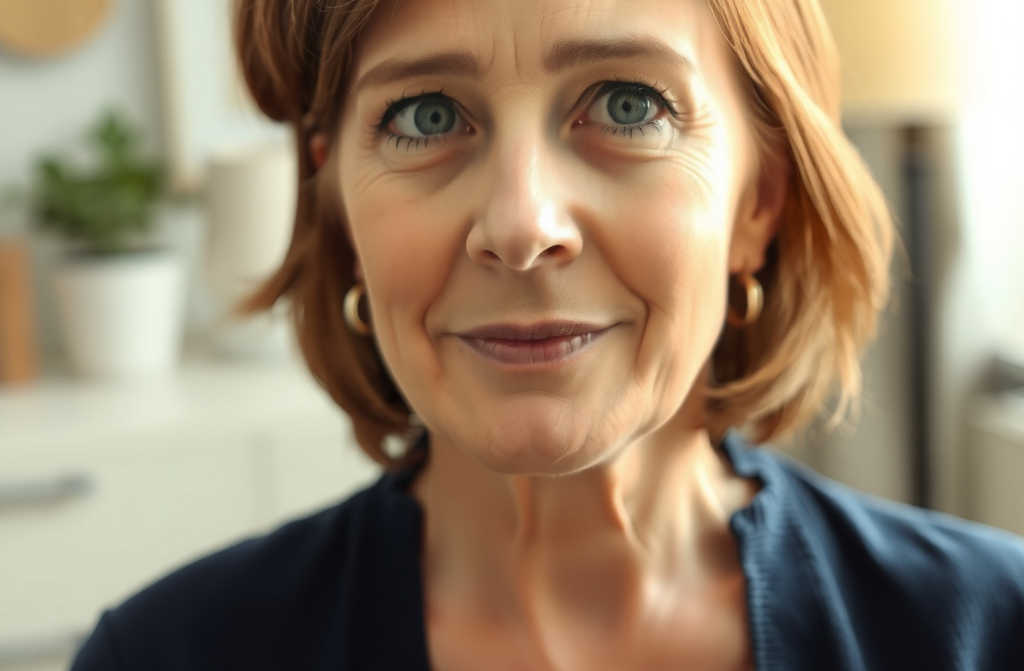
I need a man for the weekend, not for a lifetime Ive already got my life sorted.
The blunt confession of a 52yearold woman, spoken in the hazy corridors of a dream.
Lets live together.
Why?
How come? Were adults.
Thats exactly why I dont understand why.
If, at thirty, someone had told me Id be fending off men at fiftytwo who insist on moving in, I would have thought the world had finally slipped into madness. In my youth the script ran the other way: men shied away from commitment, shared bills, and any talk of the future. Now the roles have turned upsidedown. A man spends a month or two in my flat, and suddenly he is possessed by a strange urge to merge refrigerators, budgets, flats, problems, mismatched socks and every other delight of cohabitation. The oddest part isnt the urge itself; its that none of them can ever articulate why they think I need it.
My name is Eleanor Blake, fiftytwo, divorced for fifteen years. I have an adult daughter, my own London flat, a steady job, a circle of mates, two holidays a year and a remarkably tranquil existence. In the evenings I can spoon vanilla icecream straight from a tub while bingewatching series until two oclock. On weekends I drift back to sleep until noon. I can leave a mug on the kitchen table and ignore a lecture about tidiness. I can skip making shepherds pie if I dont feel like it. Most of all, no one hovers over my shoulder asking, Whats for dinner tonight?
The problem is that men seem to treat my independence as a temporary glitch that must be corrected by their presence. At first they marvel. Youre so selfsufficient, intriguing, selfcontained. Then, after a few weeks, their admiration reveals a hidden agenda: they hope my autonomy will one day be put to work for them.
The first unsettling ring came from Andrew. Andrew was fiftyeight, welldressed, spouted clever anecdotes about his trips abroad and could wield a napkin at a restaurant with the gravitas of a man over fifty. We dated for about a month: cinema, walks, cafés, countryside getaways. One night he asked, the words landing like a weight on my coffee cup:
Listen, could you come over after work?
Why?
To cook something.
I asked again, puzzled.
What to cook?
Dinner.
It turned out Andrew was tired of living alone. Not emotionally physically. His fridge was a silent, empty mausoleum. His oven refused to conjure a stew without a human hand. His washing machine seemed to demand a stewards touch. In that moment I realised he viewed a relationship as an outsourced domestic service.
Andrew, why dont you cook yourself? I asked.
He stared at me as if Id suggested he perform heart surgery.
Because youre a woman, he said.
A stunning argument, concise, airtight it shut down any further questioning, if you dont think about it too hard.
After Andrew came Simon. Simon, fiftyfive, delighted in complaining about opportunistic women; it was his favourite hobby. Every conversation, after seven minutes, spiralled into a tale of how hed been used for money. The irony was delicious, coming from a man who still drove a car older than most university freshmen and who counted every penny at the supermarket checkout.
On our sixth date he invited me over.
Come Saturday.
Alright.
Just pick up some groceries on the way.
What?
For dinner.
You want me to bring the groceries?
Yes.
And what will you do?
Ill meet you.
I still think he was an underrated genius. Few can devise a date where the woman shops, delivers, cooks, then thanks the host for the invitation.
Simon, who pays for the groceries?
Why?
What do you mean?
You have a job.
Thats when I saw that the word opportunistic was only ever hurled at others.
A pattern emerged. Men adored my flat. They liked its order. They liked that I always had food, fresh towels, crisp sheets and functioning plumbing. They liked my life. Yet most were convinced that, once the relationship began, I should expand the service to include them as well.
Victor was the most amusing. He burst into the conversation about living together with the enthusiasm of someone who had just discovered a way to slash expenses.
Imagine how economical it would be to live together.
When a man starts a sentence with economical, women of my age instinctively reach for a calculator.
In what sense?
One fridge. One internet bill. One utility charge.
For whom is it economical?
For us.
I smiled.
Victor, where do you live now?
In a rented flat.
And me?
In mine.
And suddenly the arithmetic became strangely compelling.
So youll quit paying rent, move in with me, cut costs and be happy?
Yes.
And wheres my gain?
The question hung in the air. He fell silent for a couple of minutes, his mind doing a complex calculation that never quite completed.
The funniest episode involved Graham, sixtyone, impeccably polite, utterly exhausted by solitude.
Its hard being alone, he confessed.
I nodded sympathetically.
Its easy for me, he added, stumbling.
Men normally expect a different reaction sympathy, solidarity, shared loneliness. When a woman calmly declares shes fine on her own, the internal script glitches.
And now we arrive at the core irritation that many men feel.
I do indeed want a man.
But not to wash his shirts, iron his trousers, ladle soup on Sundays, hunt for socks under the sofa, or listen to endless tales of why he cant book his own doctors appointment.
I want a man for conversation, for trips, for walks, for the theatre, for travel, for a good evening, for intimacy, for emotion, for joy not as a permanent resident of my kitchen.
Men take offense at this stance. Ive been called selfish, spoiled, overly independent, told I cant build relationships. Yet no one can explain why a partnership must inevitably become extra housework for the woman. Why does a man get a companion, confidante, lover, hostess and chef all in one, while the woman is supposed to consider his mere presence a reward?
Sometimes I think many men simply havent noticed how the world has changed. They still live by rules forged thirty years ago, when a woman found it easier to accept an inconvenient marriage than to stay single. Today, women of my generation have careers, homes, friends, grown children, mortgages paid off and lives in order. When a man appears, the question is stark: will my life improve with him?
If the answer is no, why bother?
So, I speak plainly. I need a man for the weekend. Ive already arranged my life for the long haul. And the strangest thing? Whenever I utter that, men become offended, as if Id just dealt them the most honest compliment a relationship can receive. I want someone beside me not because I cant manage alone, but because I enjoy his company.
Living together just to hand someone a free chef, cleaner and lifemanager? Sorry. I closed that vacancy fifteen years ago and I have no intention of reopening it.
Psychologists noteAfter fifty, many women find themselves at a crossroads where relationships shift from necessity to choice. They already own homes, incomes, social networks and the experience of past marriages. The question flips from How do I avoid being alone? to Will my life be better with this person?
The clash occurs because some men still view cohabitation as a natural exchange: his presence for her domestic care. Modern women, however, weigh real benefits against costs. If a relationship demands more resources than it returns in happiness, the motivation to share a roof quickly evaporates.
The takeaway is simple: mature relationships today are built more on mutual comfort than mutual need. When one partner gains convenience while the other shoulders extra labour, the union rarely endures.