30April2026
Im writing this because the evening still feels raw in my mind, and I need to sort the thoughts out on paper.
My name is Michael, Im 54, divorced, with an adult daughter who now lives on her own. The alimony stopped years ago, and my exwife has settled elsewhere and seems to be doing quite alright. Looking back, I realize I spent decades shouldering every family duty that fell my way endless home repairs, mortgages, holidays, buying the new fridge, the washing machine, that endless cycle of bring it, pay for it, fix it. In the end a man can feel less like a person and more like a walking, talking utility. After the divorce I made a firm decision: I wont sign up for that same old ride called the man must provide again. It isnt stinginess that drives me; its exhaustion from being a human cash machine on four legs.
I met Emma on a dating site. Shes 49, wellkept, steady, with a respectable job, and she isnt one of those women who constantly harp on past rogue exboys as if reading from a script. We messaged for about three weeks, then moved to phone calls, a few coffee dates, walks in the park the whole routine. It felt, at last, like Id found a mature, sensible person who understood that at our age relationships are no longer about knights in shining armour but about comfort, calm and a mutually beneficial coexistence.
From the start I was blunt about my expectations. At fiftyfour, Im not interested in romantic fireworks. I told her plainly: I want a peaceful partnership without mental gymnastics, without any demand to prove love, without any attempt to raid my wallet to fund a second youth. Ive already paid my dues; Im done. She listened, nodded, even agreed on several points, and I finally relaxed. After all, I thought, its refreshing to meet a grownup woman who sees a relationship as a partnership, not a hunt for a sponsor.
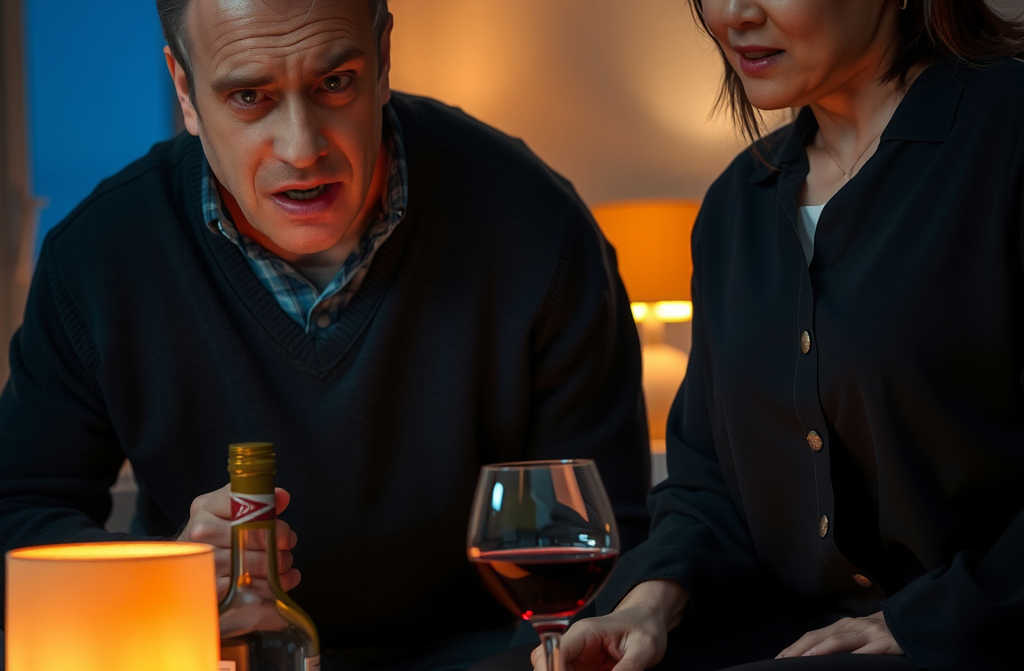
One evening we were at her flat, a spacious threebedroom house in a decent suburb, sharing a bottle of red and chatting. The conversation drifted, almost on its own, to the idea of living together.
My flat is big enough for both of us, I said. What if I keep my onebedroom flat and let you rent it out?
She asked calmly, And then?
Simple, I replied. The rent goes into a joint pot for groceries. We split the bills halfandhalf. Food either each pays their own or we chip in together. Everything fair.
For a moment her expression changed. It wasnt a sudden flare of anger, nor a theatrical gasp, but the warm curiosity in her eyes dimmed, replaced by something else. She set her glass down and asked, So youre suggesting I live in my own flat, run the household, and still chip in financially?
I didnt understand why she seemed taken aback. Whats wrong with that? Were both adults.
Then she said something that struck me like a bolt of electricity.
Being with a halfandhalfer is beneath my worth.
I blinked, sure Id misheard. What do you mean?
She looked at me, eyes steady. Straight up, Michael. Ive already lived with men like you.
The phrase men like you felt like a brand of cheap men, defecttype, set aside for disposal. I felt a flush of irritation.
Im proposing a normal, adult partnership.
She smiled thinly. No, youre offering a very convenient life for yourself.
At that point I was genuinely baffled. I wasnt asking her to support me, nor to buy me a car, settle my debts, or feed me for free. Id suggested a straightforward, adult arrangement. Yet Emma seemed to read it differently.
You want to stay in my flat, rent yours out and live off that income, while the household duties automatically become yours, she pressed.
I answered, But youre a woman, thats natural.
She stared at me as if I were a cockroach with a microphone. Whats natural? she repeated, her tone icy. Well a woman is the keeper of the hearth. She laughed, but it wasnt a laugh of humor it was cold.
So I should cook, wash, tidy, make the place cosy while you just exist beside me?
That twist was getting on my nerves.
Why just exist? Im contributing too.
Where? she asked.
Utilities, groceries
She cut in, Whose flat?
Yours.
And whose household?
I felt my temper rise. Youre blowing this out of proportion. Keeper of the hearththats absurd.
She delivered the line that still rings in my head:
Youre supposed to be the provider, Michael. But, alas, youre a halfandhalfer. Men like you cant live together, let alone multiply.
My face went hot. Fiftyfour, a grown man, being told Im unfit to procreate because I wont fully support a womanwhat a sting!
I snapped, So you need a sponsor?
She shrugged. No. I need a man.
What am I then?
Youre a man who wants the easy route.
That cut deepest because I truly believed I was offering a balanced model, not a lopsided one. The longer she spoke, the more I sensed her ironclad certainty that shed seen this script before and knew exactly how it would end.
She warned, It starts lets do 50/50, then youll end up eating more, the bills go up, Ill be the one buying the little things, cooking, cleaning, while you only bring home the occasional bag of chips and call yourself a hero.
I felt a surge of anger.
You dont even know me properly.
She replied calmly, I know this type of man very well.
Shed reduced me to a category, not a person. I tried to explain that I simply didnt want to be sucked back into the old model where the man bears everything and the woman merely creates atmosphere. Id lived that enough. But every word I uttered seemed to strip away what little respect she had left for me.
What hurt most wasnt the refusal; it was the sheer contempt in her tone, the way the respect vanished as if Id been stamped freeloader. It seemed that if a man isnt prepared to lift the full financial load, hes automatically labelled a parasite, a halfandhalfer.
The irony is that Emma earns almost as much as I do, has an adult son, her own flat, and lives comfortably alone. Yet the expectation persists that the man must be the provider. Equality, it seems, holds only until the money comes into play.
I left her flat that night, angry as a bull, without a proper goodbye. I just pulled on my coat and walked out. The phrase men like you cant multiply kept looping in my head all the way home, as if I were some sort of genetic waste.
Later, in the quiet of the night, I wondered whether it was the 50/50 that offended her, or the fact that I had already assigned the domestic roles beforehand. She was the household; I was the help.
Its become a cynical joke in my mind: women now only want money, looking for sponsors. After fifty, people are sharp enough to calculate who gets what and where theyll be most comfortable.
What irks me most is that she never tried to keep me, never phoned, never messaged, never offered an explanationjust a diagnosis and then moved on with her life.
Sometimes I still ask myself: in this day and age, is it truly impossible to propose a mature, adult partnership without instantly being branded a leech?
Michael I drove home in a cloud of thoughts, the city lights blurring past like the background hum of a radio station Id tuned out long ago. The silence in the car gave me room to hear the cadence of my own breathing, the slow rhythm that had been drowned out by years of shoulddo and mustpay.
When I finally parked in front of my own building, I sat for a moment on the curb, the night air cool against my cheeks. I thought about the countless evenings Id spent alone at the kitchen table, a single plate in front of me, the hum of the refrigerator the only companion. Those nights had taught me to be comfortable with my own company, to find humor in the absurdity of a life run on fixit instincts.
But tonight, as Emmas words replayed, I realized I had been holding onto a script of my own makingone where the only acceptable role for a man was the invisible engine that kept everything moving, and any deviation was a betrayal of masculinity. I had built walls not just for myself, but around any chance of genuine connection, assuming that the only way to avoid being a provider was to become a phantom.
I went inside, poured a glass of water, and stared at the empty hallway that led to my bedroom. The house was quiet, yet it felt less like a prison and more like a canvas waiting for a new brushstroke. I thought about the countless people Id loved and lost to the same old expectationsmy exwife, my daughter, even the friendships that had faded because I never asked for help.
In that stillness a simple truth emerged: partnership isnt a ledger of dollars and chores; its a conversation that never ends, a willingness to be vulnerable about what each of us truly needs. Emma had seen a version of me that was halfhearted, but she also saw the fear that had driven me to that half. I could either cling to the comfort of my old defenses or step into the uncertain space where both sides give and receive, not because its natural but because it feels right.
The next morning I called my daughter, something I hadnt done in months, and we spoke for hours about everything from the garden she tended to the book she was reading. She laughed when I confessed Id been stuck in a mental loop about providing and receiving. She reminded me that love, at any age, is less about balance sheets and more about the willingness to sit together at the same table, even when the menu changes.
A week later I ran into Emma at the grocery store, the same aisle where wed once debated rent and chores. She was pushing a cart, a slight smile on her lips. We exchanged a brief, honest greeting, and for the first time I didnt feel the need to defend my model. Instead, I thanked her for showing me a side of myself Id been avoiding. She nodded, eyes softening, and said, It takes courage to look at the mirror and admit what you see.
We didnt walk away as enemies or lovers; we left as two people who had briefly intersected on the road to understanding. The sting of that night lingered, but it was no longer a woundit was a reminder that the world isnt black and white, that the provider and the dependant are just labels we can rewrite.
Now, when the evening settles and the house is quiet, I still hear the faint tick of the clock, but it no longer feels like a countdown of obligations. It feels like a metronome, steady and patient, marking the moments I choose to be present, to listen, to sharenot because I have to, but because I want to. And in that simple choice, I finally feel less like a utility and more like a person who, after a long, weary journey, has learned how to sit at the table and enjoy the meal, however modest, with someone else.