The day we laid my husband to rest it was drizzling, just the sort of soft rain that makes everything look a bit blurry. My little black umbrella was no match for the hollowness in my chest. I held a stick of incense, stared at the freshly dug grave the earth still damp and I could feel myself shaking. My partner of almost forty years, my George, had become a cold handful of soil.
After the service I didnt have the luxury of wallowing. My eldest son, James, the one George trusted completely, was the first to snatch the house keys. Years back, when George was still healthy, hed said, Well both grow old; lets put everything in the sons name. If its all in his name, hell be responsible. I didnt argue. What parent doesnt love their child? So the house, the deeds, all the paperwork ended up in Jamess name.
On the seventh day after the funeral, James asked me out for a walk. I never imagined that stroll would feel like a knife to the gut. The car pulled up on the outskirts of York, right by a little bus stop. James, his tone icy, said,
Get out here. My wife and I cant look after you any longer. From now on youll have to fend for yourself.
My ears rang, my vision went fuzzy. I thought Id misheard, but his eyes were set, as if he wanted to push me out then and there. I sat on the roadside beside a cheap offlicence, clutching a single bag of clothes. That house the one where Id lived, cared for George and raised my children was now legally his. I had no right to go back.
People say, When you lose your husband you still have your children. But sometimes children feel like you have none at all. My own son had tossed me into a corner. Yet James didnt know one thing: I wasnt completely penniless. I always kept a small bank notebook in my pocket the savings George and I had built up over a lifetime, more than £300,000. We hid it away, never letting the kids or anyone else know. George used to say, People are only kind to you while you have something in your hands.
That day I kept my mouth shut. I wasnt going to beg, I wasnt going to spill my secret. I wanted to see how James and life would treat me.
The first night, after being abandoned, I took shelter under the awning of a tiny tea shop. The owner, Aunt Mabel, took pity on me and handed me a steaming cup. When I told her Id just lost my husband and my children had left me, she simply sighed,
Its a sad world these days, love. Some kids care more about the money than the love.
I rented a modest bedsit, paying the rent from the interest on my account. I was careful never to let anyone know I had a fortune. I lived simply: secondhand clothes, cheap bread and beans, and tried not to draw attention.
Many evenings I curled up on the narrow wooden bed, remembering the old house, the hum of the ceiling fan, the scent of spiced tea George used to brew. The memories hurt, but I kept telling myself, as long as Im breathing, I have to carry on.
Gradually I settled into the new routine. By day I begged for work at the market washing vegetables, loading crates, wrapping parcels. The pay was small, but I didnt mind. I didnt want to rely on charity. The stallholders started calling me Mrs. Bennett. They had no idea that each night, after the market closed, Id slip back to my rented room, open my notebook, glance at the figures for a heartbeat, then close it again. That was my secret lifeline.
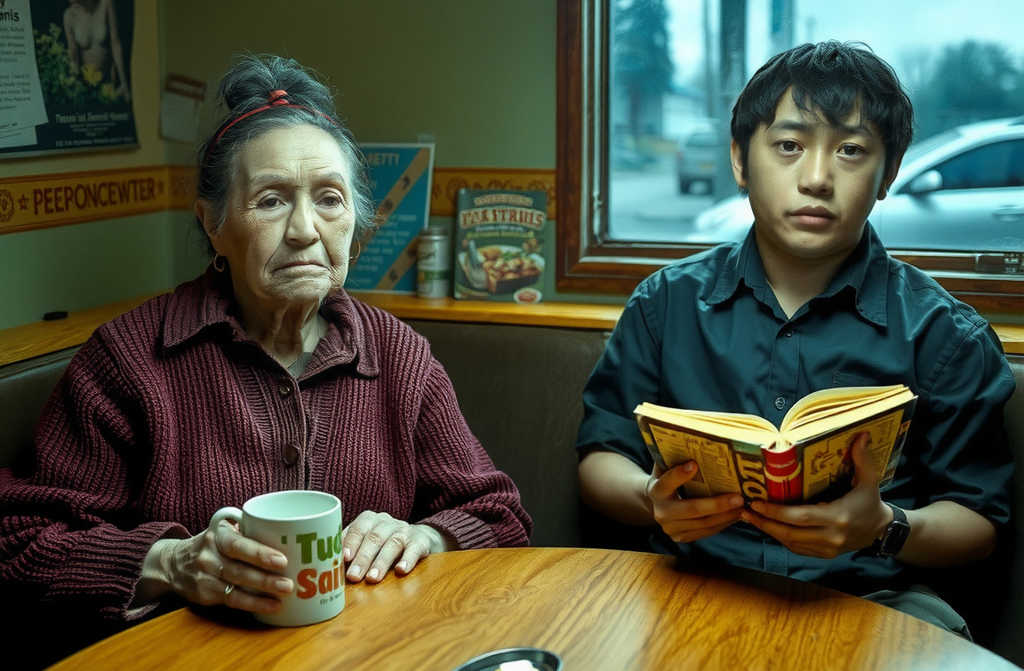
One afternoon I ran into an old school friend, Mrs. Eleanor. Seeing me at the bedsit, I told her about Georges death and how hard things had become. She felt sorry for me and offered a job at her familys roadside diner. I accepted. The work was tough, but it meant I had food and a roof. And it gave me even more reason to keep my savings hidden.
Meanwhile, I kept hearing about James. He was living with his wife and kids in a big suburban house, had bought a shiny new car, but he was also gambling on the weekend. A neighbour whispered, Hes probably already pawned the land deeds. I listened with a sting, but I didnt reach out. Hed left his mother at a bus stop; I had nothing left to say to him.
One rainy afternoon, while I was cleaning the diner, a welldressed stranger came looking for me. His face was tight. I recognised him he was a drinking buddy of James. He stared straight at me and asked,
Are you Jamess mother?
I nodded cautiously. He leaned closer, his voice heavy with pressure,
He owes millions. Hes in hiding now. If you still love him, help him out.
I felt a chill. I gave a faint smile,
Im terribly poor now. I have nothing left to give.
He walked away angry, and I was left to think. I loved my son, but his cruelty cut deep. Hed abandoned his own mother at a bus stop; now he was paying the price. Was that fair?
Months later James turned up at the diner, gaunt, eyes rimmed red, collapsing onto my knees as he sobbed,
Mother, Ive been a nightmare. Please, help me one last time. If not, everything will be lost.
My heart hammered. I recalled the nights Id wept silently, the scene of my abandonment, and also Georges parting words, Whatever happens, hes still my son. I stayed quiet for a long while. Then I slipped into my room, pulled out the notebook with the £300,000 hidden inside, and placed it on the table in front of James. My eyes were calm but firm,
This is the money we saved all our lives. I hid it because I feared you wouldnt value it. Now I give it to you. But remember, if you ever trample my love again, no amount of money will ever let you hold your head high again.
James took the notebook trembling, tears streaming down his face like rain.
I dont know if hell change, or if he wont. But as a mother, Id finally done my last duty. And the secret of that savings account finally saw the light, just when it was needed most.