I still recall that evening as if it were yesterday, sitting here with my notebook open in the quiet of my Warsaw apartment. Zosia and I were heading up the stairs in our housing block when the yelling from behind one of the doors rang through the whole entrance. „What’s wrong with you this time?! How much more of this can I take?! I’ve had enough of it all!” My mother’s voice carried far, full of the same frustration that had become our daily background.
At that moment we stopped dead, like we’d hit something solid. Our eyes locked for a second, and no words were needed. We both knew without speaking that it was better to turn away. Sighing together, we spun around and slipped off toward the next entrance where our babcia Jadwiga lived. Her flat had turned into our safe spot lately. We used to drop by only on weekends before, but now we found ourselves there almost every night.
The air back at our parents’ place had grown impossible to breathe. Anna and Michał, our mother and father, shouted at each other nonstop, lost in their own world. What made it worse was how they started pulling us into the middle of it all. Mother would spin toward Zosia and demand, „Tell me, I’m right, aren’t I? You agree with me?” Father wouldn’t wait for an answer before turning to me with „No, I’m the one who’s right here! Back me up!”
Zosia and I kept quiet. Neither of us wanted to pick a side or get dragged into their endless fights. All we craved was silence, calm, and some warmth, the kind we always found at babcia’s.
These outbursts happened every single day, repeating like a scratched record that nobody bothered to lift the needle on. We had learned to read the small signs: a sharper tone, quicker movements, the way they glanced at each other. Those were the signals it was time to go. What kid would want to stay in a house full of that strain, where any chat could flip into a full-blown row in seconds?
We couldn’t figure out what had lit the fuse for this mess. Our family had never been picture-perfect, but earlier on our parents knew how to work things out. Fights popped up now and then, sure, but they wrapped up with steady talks instead of raised voices. Mother might frown, father might lift his tone a bit, yet half an hour later it was smoothed over. Everyone would sit down again, drink tea, and plan the weekend.
Roughly two years back, though, something shifted. It felt like our old parents had been swapped for strangers who picked fights over nothing. A dirty cup left on the table? That sparked a long speech about carelessness and disrespect. A shirt hung on the wrong hook? Sharp comments about keeping order. A teaspoon forgotten in the sink? Treated like some big offense needing minutes of debate.
One night at babcia’s, Zosia sat at the kitchen table stirring her tea without thinking. She stared at the swirling brown liquid for a long while before asking with real pain in her voice, „How did things get this way, babcia? It all turned after their holiday together. What happened there?”
Babcia Jadwiga paused, set her cup down, and lightly ran her hand over Zosia’s arm. She had her own guesses about the split, and they didn’t make her happy.
” Grown-ups sort their own matters,” she answered gently, keeping her voice steady. „Sometimes folks need time to see the right path.”
Zosia nodded, but her eyes showed she didn’t fully buy it. She sensed babcia was holding back, yet she didn’t push. What was the point, when we were still seen as kids who wouldn’t get the serious stuff?
„We can’t stand the yelling anymore!” I blurted out, frustration boiling over. „We can’t even do homework or read a book in peace! I can’t remember the last time we all sat down together for a meal. If it’s this tough for them to be around each other, they should split up things would be simpler for everyone!”
The words came out raw, but they held the truth of those months. I spoke for both of us I knew Zosia felt the exact same. Our home had lost all quiet: mother would snap something, father would answer with irritation, and the back-and-forth would start with nowhere to hide.
„Mateusz…” babcia began, setting her knitting aside. She looked at me closely and slowly shook her head. „Did you stop to think what happens if they divorce? The two of you would have to be divided. Are you ready to live apart from Zosia?”
„We’ll stay with you!” Zosia jumped in right away, her eyes pleading. „We’re already here most of the time! You wouldn’t mind, right?”
Babcia Jadwiga sat still for a moment. She got how worn out we were from the constant arguments. On one side, we’d be safe under her roof a steady, kind place where homework could happen without noise and we could feel looked after. She cared for us deeply and was ready to wrap us in that care.
On the other side, what about Anna and Michał? How to tell them their children didn’t want to live at home anymore? Would they even go along with it? And if they did, how would that change their bond with us? Could this step end up cutting ties completely?
„Let’s not decide in a hurry,” she said after a deep breath. „You know I’m always glad to have you here. But first we should try speaking with your mother and father. Perhaps together we can find a way to mend things.”
„Don’t worry, we’ll handle the talk with them,” Zosia said, smiling with relief. Babcia was nearly on our side, and that mattered most. „Just don’t turn us down, please! We truly can’t keep going there! It’d be easier for them apart or else one day they might really harm each other! I saw father raise his hand at mother yesterday… He didn’t hit her, I swear! But he was right on the edge.”
Zosia stopped, lost in that awful memory. She had gone to the kitchen for water and stood frozen in the doorway: father half-turned to mother, his arm shooting up, mother instinctively ducking. A second later he lowered it, but that second had stretched forever for her.
„Babcia, say yes!” I urged, stepping closer and taking her hand as if afraid she’d pull back. „We’ll help you with every chore around the house. Just don’t make us go back there. They pay us no mind at all! Yesterday I told father about the parent meeting. You know what he said? 'Go ask your mother!’ So I did. Guess what she told me?”
„Go ask your father?” babcia Jadwiga asked quietly, already knowing.
„Exactly!” I gave a bitter laugh. „Then they spent another two hours arguing over who would go, yelling across the hallway from separate rooms while I just stood listening.”
„And I needed a signature for that museum trip,” Zosia added, eyes down as her fingers tugged at her sleeve. „Now I’m the only one in my class who won’t go because neither of them signed the form. Instead they fought mother yelling it was father’s job, father insisting she handle school matters.”
Babcia Jadwiga watched us and saw the deep tiredness in our faces. It wasn’t ordinary kid exhaustion; it had built up over months where every day mirrored the last, where family warmth was replaced by fights and support by indifference.
„It’s always this way,” I sighed, shoulders dropping. My voice sounded drained, like I’d said it a hundred times. „Any request we make turns into fuel for another row. We don’t even want to come home anymore. A couple days ago we got in at eleven at night and do you think they scolded us? No, they just sent us straight to bed without asking where we’d been. Later they spent ages blaming each other for raising us wrong.”
Zosia and I sighed at the same time. In recent months we had seriously weighed whether divorce was the only escape. Yet the thought of being split up terrified us one with mother, one with father, our closeness reduced to occasional weekend visits.
We went over choices in whispers at night in our room. Once I joked about running away just grabbing our bags and heading off with no plan. I said it smiling, hoping to ease the mood, but Zosia took it seriously. Her eyes lit up for a moment, then she said quietly, „What if we actually left? Even for a few days…” Right then we both saw how bad things had gotten even fleeing didn’t seem crazy anymore.
That’s when the idea hit us: babcia! Why not move in with her? It came to us together, like we shared the same thought. Zosia spoke first: „Let’s ask babcia if we can live here. She won’t yell or fight. We won’t have to hear those endless arguments…” I jumped in: „Yes! She’s kind and always backs us. Her place is big there’s room for us.”
We started picturing the new life: quiet breakfasts, homework without noise, evenings playing board games with babcia. No shouting, no blame, no need to hide in our room to avoid the heat. For the first time in ages, hope flickered in us. Let our parents sort their own mess; we would finally get some rest that’s what Zosia and I pictured as we imagined life at babcia’s.
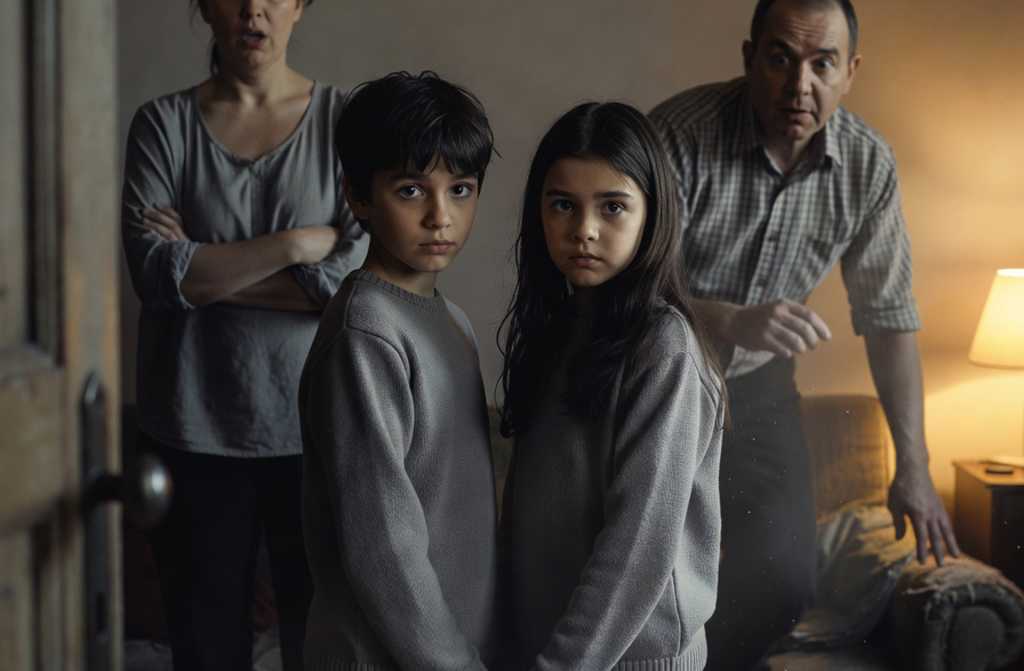
Later that week we stood before our parents and said firmly, „Mother, father, we need a serious talk.” We had waited for an evening when both were home and walked straight into the living room. Zosia gripped my hand tight it helped her stay steady. „But first promise you’ll hear us out completely before saying anything.”
Michał set his phone down, eyes wide with surprise. Anna, who had been sorting items on the couch, straightened up fast. Her face looked like we’d said something impossible.
„This is all your doing!” she snapped, arms crossed. „The children are already giving us orders! As if we have to answer to them!”
„And listen to who’s talking!” Michał shot back, phone aside. „I’m always working to keep this family going. You’ve been with them the whole time! What have you taught them? Why are they bossing us now?”
We glanced at each other. We had expected this the talk sliding straight into their usual blame game. But we couldn’t stop.
„Stop it!” Zosia cried out, voice thick with tears. She stepped forward, trying to keep her words clear and calm even as everything inside shook. „Mateusz and I have thought it over and decided you two need to get a divorce.”
The room went dead quiet. Anna stood with her mouth half open, while Michał rose slowly from the couch.
„Well, that’s something new!” mother’s voice turned sharp. „Zosia, you’re still far too young to tell grown-ups how to run their lives! And what else have you two 'decided’? Maybe you’ll split the flat for us while you’re at it?”
„If you don’t divorce, we’ll contact child services,” I said, holding Zosia’s hand tighter for strength. My voice stayed firm even if I half-doubted my own words. „And then, father, you could lose your job. Your company doesn’t welcome scandals, does it? You said yourself that reputation means everything.”
„And you, mother,” Zosia went on, meeting her eyes straight, „the neighbors will stop respecting you. They won’t even speak to you! Everyone already knows how you two yell, and we’ll fill in the details!”
„They’re threatening us! Just look at them!” Anna finally got out, glancing between us. „These are our own children! How can you act this way toward us?”
„We’re not threatening,” I said quietly but without wavering. „We just want you to see that things can’t stay like this. We’re exhausted! Tired of the shouting, of you not listening to us, of every small ask turning into a fight.”
„You’ll divorce, move apart, and we’ll live with babcia,” we finished together, like we’d practiced. „It’ll be better for everyone: peace for us, no constant clashes for you. We don’t want to stay caught between you two like between two fires.”
Our parents froze. For the first time in ages they had no quick reply. Normally they would jump in, cut each other off, hunt for someone to blame but now both seemed struck silent.
Their thirteen-year-old twins were acting in ways they’d never expected! Zosia and I stood side by side, hands linked, facing them with steady looks and none of our usual shyness. We were talking about heavy things the adults themselves tried to avoid.
Anna and Michał had thought about divorce themselves more than once. But one question always held them back who would the children stay with? Splitting us twins felt wrong we were so close, did everything side by side, leaned on each other. They couldn’t picture tearing us apart, forcing us into separate homes and only seeing each other on weekends.
The idea of babcia’s place hadn’t crossed their minds earlier. Somehow it never came up, maybe because they were too wrapped up in their own hurts and complaints. But hearing our suggestion now, Michał and Anna couldn’t help wondering: what if this was the answer? Babcia loved us, her flat was roomy, she was always glad to see us… Perhaps this would ease at least some of the trouble?
„I’ll ring my mother,” Michał said at last through clenched teeth. His voice was low, like the words came hard. „If she agrees…”
He never finished. Anna cut in sharply, and the tiredness in her tone surprised even her: „Then we can finally stop making each other miserable. Go ahead and call. I’ll be glad not to see your face every day.”
Her words hung there. She hadn’t meant to sound so harsh, but years of built-up pain let them slip out.
„And I’ll be thrilled!” Michał answered, trying to mask the hurt with a dry tone.
No real anger sat in his voice just a bitter grin at how their married life had turned out. He pulled out his phone and slowly dialed babcia’s number. As the rings went on, both looked in opposite directions, avoiding each other’s eyes. They still didn’t know what would come of this talk, but they sensed the line might already be crossed…
That day our Wronowski family settled on a big change. It began with a long conversation between Michał and babcia Jadwiga. She listened without interrupting, only asking a question here and there for more detail.
When Michał had said everything, a quiet moment followed. Babcia drew a long breath and spoke: „If you both see this as better for the children, then I agree. They’ll be safe here, and I’ll look after them.”
By evening the couple met in the kitchen the first time in a long stretch without yelling or jabs. They sat across from each other and went over the details step by step. Bit by bit they reached the same view: divorce was the only sensible step. We would move to babcia’s, and they would send money each month for our upkeep.
Neither planned to leave us on our own. Both father and mother promised to visit on weekends but on different days to keep their contact low.
„I’ll come Saturday morning and take them out for a walk, you on Sunday,” Michał said wearily, and Anna nodded in agreement. „This keeps it easier. The main thing is the children don’t feel left behind.”
Their aim was to cut down on talks between them and avoid fresh fights. They agreed not to speak badly of each other around us, not to pull us to one side or the other, and not to argue when we were near.
„We are still their parents,” Michał said. „And we need to stay that way, even if we’re no longer husband and wife.”
Time proved the choice worked well. Zosia and I could finally ease up and live like regular teenagers. She signed up for an art club something she’d wanted for ages but never had the calm to try before. I joined a football team and made new mates there. We started spending time together again: wandering the streets, catching films, chatting about school without the dread that a row would break out any second.
Steady ground returned to our studies too. Now we had a quiet corner for homework, no distractions from raised voices. Assignments got done without stress, and that showed straight away in our marks. Teachers noticed the shift: „You’ve become so focused, you two! Keep going!”
Slowly life settled into a new rhythm not flawless, but steady and calm. We stopped ducking into our room, stopped jumping at loud voices, stopped worrying over every move. We simply lived the way teenagers should when they’ve found something steady amid hard times…
Five years on, the Wronowski household moved along at an even pace. Zosia and I had grown used to the new routine: classes, clubs, time with friends, cozy evenings at babcia’s. Our parents still visited on their separate days each with their own time, gifts, and care, yet without old complaints. Over those years they had learned to talk with restraint and politeness, free of the old angry outbursts.
The first real meeting between the former couple came at our school leaving celebration. The school held a formal evening, and both came. They kept their distance at first, taking seats at opposite ends of the hall, but the cold between them began to thaw.
When the dancing started, Michał walked over to Anna unexpectedly: „How about a dance? For old times.”
She paused a moment, then nodded.
After the evening they sat for a long while in the school courtyard, watching the graduates laugh near the fountain. Talk started on its own first about us, then about their shared past.
They spoke a great deal that night, bringing up the good parts of their marriage and acting with respect. They focused on the positive things that had once tied them, not the old wounds. Watching from afar, Zosia and I felt real gladness. Still, it stung to see the two people closest to us treat each other almost like strangers.
But then trouble came out of nowhere. The next day Michał and Anna asked us to a café. Over cups of tea, they glanced at one another, took each other’s hands, and Michał smiled wide as he told us: „Kids, your mother and I have thought it over and decided to marry again. In these years we’ve seen that our feelings never died out! We still love each other and want to be a family once more.”
His voice carried real joy, like he was sharing the best news ever. Anna glowed, clearly waiting for our happy response.
We looked at each other our faces clouded right away. Doubt flashed in Zosia’s eyes, and I tightened my fists under the table. The same old mistakes again! What were they thinking? Could they share a home without the clashes?
„Are you serious?” was all Zosia could manage.
„Completely,” Michał replied with confidence. „We’ve both changed. We’ve learned to listen to one another. And we want to give our family another try.”
We stayed quiet. Conflicting feelings churned inside us: part of us wanted to trust that our parents had truly shifted; another part feared reliving the hurt from before.
Still, we didn’t argue against it. We didn’t even reply to the news, which left our parents clearly hurt. Anna looked at us, puzzled: „What’s wrong? Aren’t you pleased? We thought you’d be happy for us.”
We just met each other’s eyes and lifted our shoulders. What could we say? „Don’t do this! Don’t wreck your lives again”? The words wouldn’t come. We didn’t want to seem heartless, yet we couldn’t fake that everything was fine.
The rest of the visit felt strained. Our parents tried sharing their plans, we nodded politely, but our minds were elsewhere. On the way back Zosia said softly to me, „I hope they know what they’re doing.”
I could only breathe out in reply…
„So we’re heading to the capital?” Zosia opened her laptop, ready to look through university pages. „Farther from this chaos. I can already picture how this whole show will finish!”
„Of course we’re going,” I answered firmly, and my voice carried a tiredness beyond our years. I ran a hand through my hair as if shaking off the weight of the past months. „They’ll manage peacefully for a month, maybe two at most. Then it’ll start fresh: the shouts, the door slams, the accusations… I don’t want to be trapped in their relationship any longer. I don’t want to wake up each morning wondering what mood they’ll be in or which of us will catch the next wave of blame.”
I got up and walked around the room, gathering scattered books without thinking. The same question turned in my head: why do adults, who ought to show wisdom and steadiness, act like restless teenagers? Why do they keep stepping into the same trouble instead of fixing it?
„We have to leave,” I said again, pausing at the window. Outside the light was fading, casting the city in gentle orange hues. I gazed out as if trying to spot my own path ahead. „Far away. Far enough that their rows can’t touch us. Let them work it out on their own. We’re not their counselors, their go-betweens, their targets anymore. We have our own lives, our own hopes, and I won’t let another round of their chaos ruin that.”
„When do we send the applications?” Zosia asked evenly.
„Tomorrow,” I replied without pause. „So there’s no chance to back out.”
She nodded without a word, eyes fixed on the screen. Pages from Warsaw universities scrolled by she had spent a week checking courses, dorm rules, and job chances after graduation. Beside the laptop her notebook held growing lists: good and bad points for each choice, required papers, deadlines, contact details for admissions offices.
„The key is studying in peace, without their messes pulling us in,” she said softly, as if wrapping up her thoughts. „It’s good we’ll be so far.”
„Right,” I agreed, taking a seat next to her. I leaned in a little, reading the lines on the screen. „And when they start pointing fingers again about who’s to blame, we won’t even hear it. Let them ring, complain, try to drag us into a 'family meeting’ we’re done with that. And their wish to 'give the relationship another chance’ I smiled without humor that’s their decision, not ours.”
Anna and Michał went through with the second wedding after all. This time they chose a simple ceremony at the registry office and a small dinner with just family and a few friends. No big fuss, no extra costs, and honestly no desire for anything showy.
In the photos from that day they looked genuinely content. Smiles, linked hands, looks full of care. You could see their fingers intertwined, gentle glances, small touches. It seemed every old hurt was behind them, that the time apart had helped, and that they now knew what they wanted with nothing but good times ahead. Looking at those pictures, Zosia and I couldn’t help wondering if maybe this time things would stay different.
But no. The first weeks after the wedding stayed surprisingly calm. They tried harder to notice each other, said thank you more, and skipped the small nags. Yet old patterns crept back. Within a month raised voices filled the flat again. At first they were held-back complaints quiet but pointed: „Did you leave that mess again?” „Why didn’t you say you’d be late?” „You could lend a hand since you’re home.”
Soon the fights turned open. Rows broke out over little things: wet towels left in the bathroom, bread not bought, the TV turned up too loud. Words grew sharper, voices stronger, gaps between arguments shorter.
And after two months, just as I had expected, things boiled over. One evening a dispute over who should shop for food exploded. Michał lost control and hurled a cup against the wall it shattered loudly, pieces scattering across the kitchen. Anna, just as angry, grabbed a plate and smashed it on the floor. The crash of breaking dishes rang through the flat.
After scenes like that they always tried calling us. Each call opened the same way: one of them rang, still catching their breath from the fight, and poured out all the stored-up hurts.
„Can you believe what he said today?” Anna would say, voice breaking as Zosia answered. „He doesn’t even try to see my side!”
„Son, you need to understand me she has no control over herself,” Michał would tell me, sounding worked up. „I do my best, I really do, but she seems to hunt for reasons!”
Zosia and I had learned to cut these talks short gently but clearly. We no longer got pulled into long debates or tried to judge who was right. Our replies stayed brief and steady.
„Mother, I’m in class now, I’ll ring later,” Zosia would say calmly, checking the clock twenty minutes until the lesson, but she had no wish to hear another long complaint.
„Father, I’ve got urgent work, let’s talk about this at the weekend,” I would answer, eyes on my laptop. I knew letting a parent vent would stretch the call to an hour, followed by more calming.
„Later” and „at the weekend” kept getting put off. We used excuses studies, side jobs, time with friends and slowly the calls grew fewer. Zosia and I felt no guilt; we were simply guarding our own calm and hours, aware we couldn’t fix what went on between our parents.
We truly had our own path now full, worthwhile, and distant from their dramas. Our days were built from our own concerns, interests, and plans, not from waiting for the next row in the next room.
Zosia threw herself into psychology studies. She enjoyed learning how the mind works, why people do what they do, and how to help someone in a tough spot. In her third year she began volunteering at a center for teenagers from troubled homes. There she ran group meetings, helped the young people voice their feelings and find ways through hard times. She saw traces of our own story in them and tried to offer the attention and backing she once missed.
I found my place in IT. From the start of university I grew drawn to programming the clean logic of code, the chance to build things that worked, the puzzle of tricky technical problems. I spent hours at the screen, picked up new coding languages, and joined student competitions. In fourth year my group placed third in a regional event for mobile apps that built my confidence and confirmed I was on the right track. I took a part-time role at a small IT firm, where I soon showed myself as reliable and skilled. Working on actual tasks taught me how to deal with colleagues, manage time well, and handle unusual challenges.
We began shaping our future without tying it to our parents’ rows. Zosia hoped to open her own practice one day, helping families learn to talk things through. I thought about starting something of my own. We went over ideas over tea in cafés, sketched plans, and noted thoughts in notebooks. In those moments we felt steady ground under us. We had a direction. We had a life that was ours alone.
When Anna and Michał tried once more to pull us into their troubles ringing in tears and describing how bad things were, how they couldn’t understand each other we answered with calm firmness. We had already talked through how to handle the call so we wouldn’t give in or slip back into fixing their issues.
„That’s enough, dear parents deal with it yourselves,” Zosia said straight out. „You have your life, we have ours.”
„But you’re our children!” Anna wept. „You have to stand by us!”
„If you acted like grown-ups instead of kids, we would,” I said at once. „You chose to marry again, and now you keep hurting each other. You can’t share space without fighting, so why keep doing it? Get the divorce and move apart.”
Those words might have sounded harsh, but Zosia and I simply wanted to live without the storm.
Looking back through these pages of my diary, the lesson that stands out is this: protecting your own peace sometimes means drawing clear lines, even with the people who raised you. A family should lift you up, not wear you down, and choosing your own steady ground first is not something to regret.